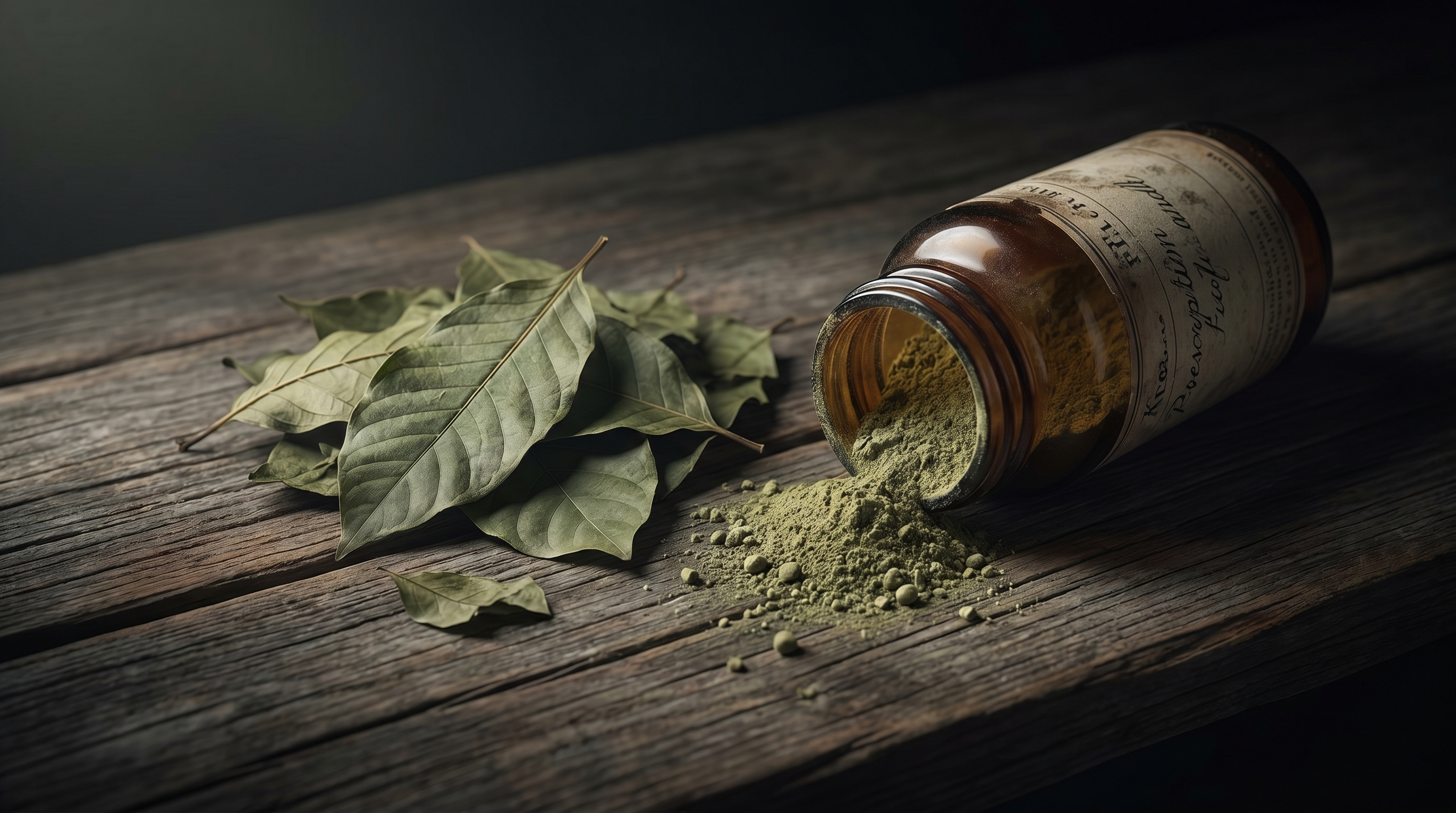
Kratom is sold in more than 15 million American hands today. It moves through a $1.3 billion annual U.S. market. The FDA has logged more than 1,800 adverse event reports tied to it. And almost none of the people who buy it at a gas station counter have any idea they are purchasing a product that binds to the same opioid receptors as morphine and fentanyl.
This post walks through what kratom is and how it actually works, the harms it produces, the defendants worth naming, the regulatory and scientific record, the viable legal theories, and where this tort sits in its lifecycle. It is written for mass tort legal professionals evaluating intake opportunities.
Executive Summary
Kratom is a plant-derived substance sourced from the Mitragyna speciosa tree, native to Southeast Asia. In the United States, it has been sold for years in gas stations, smoke shops, and online storefronts under brand names promising energy, pain relief, anxiety reduction, and help with opioid withdrawal. Retailers have marketed it as a "natural supplement" and, in many cases, as a legal and safe alternative to prescription opioids.
It is neither safe nor a simple supplement. Kratom's active alkaloids, mitragynine and 7-hydroxymitragynine, bind directly to the same mu-opioid receptors targeted by morphine, oxycodone, and fentanyl. At higher doses, users develop full opioid-type physical dependence. Withdrawal is severe, characterized by muscle pain, insomnia, nausea, anxiety, and cravings that can persist for weeks. The FDA has documented over 1,800 adverse event reports, including 44 deaths in which kratom was identified as a contributing factor. Additional toxicological studies link kratom to acute liver failure, cardiac arrhythmia, and seizure.
The Core Legal Theory:
Kratom manufacturers and distributors sold a product with known opioid-receptor activity and dependence potential while labeling it as a natural supplement with no addiction risk. That gap between what they knew and what they told consumers is the foundation of the failure-to-warn claims driving this litigation.
Despite the FDA's public warnings, repeated attempts to schedule kratom under the Controlled Substances Act, and a growing body of peer-reviewed research confirming its opioid-like pharmacology and dependence liability, the kratom industry has successfully resisted federal scheduling, leaving millions of consumers with no warning that the product they purchased at a convenience store could trigger opioid-type addiction. That regulatory gap, exploited by manufacturers and distributors for profit, is the engine of this tort.
Litigation is now developing across multiple states. While no federal MDL has been established as of this writing, individual cases and state court consolidations are advancing, and the factual and scientific record needed to support large-scale litigation is increasingly mature. For mass tort firms with experience in consumer protection, failure-to-warn, and addiction-related torts, the kratom docket represents a first-mover opportunity.
The Product: What Kratom Is and What It Does
Kratom leaves have been used for centuries in Thailand, Malaysia, and Indonesia, where laborers chewed them for stimulant effects at low doses. In the United States, kratom is sold primarily in powder, capsule, and concentrated liquid extract form, often at doses far exceeding those used traditionally. American products are frequently standardized to higher alkaloid concentrations and consumed in quantities that produce pronounced opioid-like effects.
The Opioid Receptor Mechanism
The pharmacology of kratom is not disputed in the scientific literature. Mitragynine and 7-hydroxymitragynine, kratom's primary active alkaloids, are partial and full agonists at the mu-opioid receptor, the same receptor responsible for the analgesic effects and addiction potential of prescription opioids. 7-hydroxymitragynine, present in smaller concentrations but significantly more potent, has been found in some studies to be more potent than morphine on a per-milligram basis at the mu-opioid receptor.
Repeated activation of the mu-opioid receptor produces neuroadaptation. The brain downregulates its own receptor sensitivity and endogenous opioid production in response to the external signal. The result is physical dependence: the user requires kratom just to feel normal, and experiences withdrawal upon cessation that is pharmacologically indistinguishable from opioid withdrawal.
How Kratom Was Marketed vs. What the Science Shows
The gap between industry marketing and established pharmacology is wide, and it is documented:
- "100% natural herbal supplement." The active alkaloids are mu-opioid receptor agonists, pharmacologically equivalent to opioids at the receptor level.
- "Not addictive" or "non-habit forming." Physical dependence develops with regular use, and the withdrawal syndrome is clinically documented and opioid-like.
- "Safe alternative to opioids." The FDA has identified 44 kratom-associated deaths, and liver toxicity, cardiac events, and seizure are documented risks.
- "Helps with opioid withdrawal." Kratom can substitute one opioid dependence for another. It has no FDA approval for any therapeutic use.
- "No psychoactive effects." It produces dose-dependent euphoria, sedation, and analgesia consistent with opioid receptor activation.
Consumer Harm: The Injuries Driving the Litigation
Kratom plaintiffs present across a spectrum of harm, from severe physical dependence requiring medically supervised detoxification to acute organ injury and death. The failure-to-warn theory is strongest where plaintiffs can demonstrate that they consumed kratom in reliance on manufacturer representations that the product was safe and non-addictive, and that they would have made a different choice had they been warned of its opioid-like dependence liability.
The documented injury categories include opioid-type physical dependence and withdrawal syndrome, with severe muscle pain, insomnia, anxiety, sweating, nausea, and cravings requiring medical management. They include acute liver injury and hepatotoxicity, including kratom-induced cholestatic hepatitis documented in peer-reviewed case reports. They include seizure activity, particularly in users combining kratom with other substances or consuming high-alkaloid extracts. They include cardiac arrhythmia and cardiovascular events linked to kratom alkaloid activity, and respiratory depression and overdose, particularly in polypharmacy cases or with high-concentration liquid extracts. They include wrongful death in cases where kratom alkaloids contributed to fatal respiratory depression or organ failure. And they include economic harm from addiction treatment costs, lost employment, and the expense of medically supervised detoxification.
The Opioid Withdrawal Parallel:
Plaintiff attorneys familiar with opioid litigation will recognize the fact pattern immediately. Consumers used a product marketed as non-addictive and natural, developed dependence, and faced withdrawal indistinguishable from prescription opioid withdrawal when they attempted to stop. The science supporting this claim is peer-reviewed and well-developed, and plaintiff expert infrastructure is increasingly available.
"Kratom withdrawal is real, it is opioid withdrawal, and consumers were told it could not happen. That is a textbook failure-to-warn case."
Plaintiff Profile: Who Is Harmed
Kratom's consumer base is broader and more sympathetic than many assume. While it has a following among recreational users, a substantial portion of kratom consumers are individuals who turned to the product specifically to manage chronic pain, anxiety, or opioid withdrawal — populations already carrying significant medical and psychological burden. Many were directed to kratom by online communities or even well-meaning acquaintances as a "safe" self-management tool for opioid dependence. These plaintiffs present compelling narratives of reliance and betrayal that resonate strongly with juries.
Defendant Landscape: Who Can Be Sued
One of the distinctive features of the kratom tort is the presence of multiple viable defendant tiers, each with its own exposure profile and settlement capacity. Unlike pharmaceutical litigation with a single manufacturer, kratom's loosely regulated supply chain creates layered liability across manufacturers, processors, distributors, and retailers.
Tier 1: Branded Manufacturers and Processors
The largest kratom companies by market share are the most natural primary defendants. These include companies that import raw kratom leaf from Southeast Asia, process and standardize it into consumer products, and sell under branded labels with specific marketing claims. Key targets include American Kratom Association member companies, which have actively lobbied against FDA regulation and scheduling while making public safety claims; branded manufacturers such as Mitragaia, Kraken Kratom, Happy Hippo Herbals, and similar companies with significant national distribution and documented marketing representations; and liquid extract manufacturers, whose high-concentration products present the highest individual dose risk and the clearest gap between marketing and pharmacological reality.
Tier 2: Distributors and Wholesalers
Companies that distribute kratom products to retail locations can be named under distributor liability theories in jurisdictions that impose liability on entities in the chain of distribution. Many have made their own marketing representations in trade materials and may have had independent knowledge of safety concerns. Distribution companies with national reach and significant revenue are priority targets in this tier.
Tier 3: Retail Chains
Convenience store chains, smoke shop operators, and online retailers that sold kratom with knowledge of its pharmacological properties may carry independent failure-to-warn exposure, particularly where they made their own product representations or sold store-branded kratom products. Retail defendants typically have less exposure than manufacturers but can be valuable for venue and settlement purposes.
Regulatory Complicity as a Liability Amplifier:
The American Kratom Association (AKA) has spent millions lobbying against FDA scheduling and promoting the Kratom Consumer Protection Act at the state level — a framework designed to legitimize the industry while avoiding federal oversight. Internal communications from AKA lobbying campaigns, if obtained in discovery, could be highly probative of industry-wide knowledge of addiction risk combined with deliberate suppression of warnings.
Regulatory Record and Scientific Foundation
The regulatory record on kratom is extensive and strongly supports plaintiff positions. The FDA and DEA have repeatedly attempted to restrict kratom, only to be met with industry-organized opposition. That pattern of documented agency concern paired with industry obstruction closely mirrors the early stages of successful opioid litigation.
The timeline is worth walking through. In 2014–2015, the FDA issued an import alert blocking kratom shipments and began detaining and destroying kratom imports at U.S. ports of entry. In 2016, the DEA announced its emergency intent to place kratom's primary alkaloids into Schedule I, then withdrew after intense industry and consumer lobbying. In 2017, FDA Commissioner Scott Gottlieb issued a public statement declaring kratom an opioid with significant abuse potential, and the FDA expanded its import alert. In 2018, the FDA published a scientific analysis confirming that kratom alkaloids bind to mu-opioid receptors, identified 44 deaths associated with kratom use, and issued a mandatory recall of certain kratom products.
From 2019 through 2021, multiple peer-reviewed studies documented kratom-induced hepatotoxicity, dependence syndrome, and withdrawal, and the CDC documented kratom in overdose deaths. From 2021 through 2023, state legislatures began passing Kratom Consumer Protection Acts (KCPA) in several states, creating an implicit acknowledgment of safety concerns while resisting outright bans. In 2024, the FDA issued updated guidance reiterating kratom's opioid pharmacology and warning consumers of addiction and injury risk, and the adverse event database exceeded 1,800 reports. In 2025–26, plaintiff litigation has expanded, with early cases filed in multiple federal districts and state court consolidations emerging — though no federal MDL has yet been established.
Liability Theories and Legal Framework
The kratom tort is grounded primarily in failure-to-warn, with supporting claims in consumer protection, negligence, and, in appropriate cases, fraud. The legal framework draws on well-established principles from tobacco, opioid, and dietary supplement litigation.
The core theories against manufacturers and distributors run along several tracks. Failure to warn is the centerpiece: manufacturers knew or should have known that kratom causes opioid-type physical dependence and failed to disclose that risk in product labeling or marketing materials. Negligent misrepresentation picks up the affirmative claims — that kratom is non-addictive, natural, and safe — and treats them as actionable where they contradict known pharmacological data. Consumer protection and unfair trade practices claims are available through state UDAP statutes in virtually every jurisdiction, often with fee-shifting and multiplied damages. Products liability theories reach negligent design and testing, where manufacturers selected kratom extract concentrations and formulations known to produce dependence without adequate risk assessment. And civil RICO may be viable against organized industry actors where there is evidence of coordinated efforts to suppress or misrepresent safety information, as was successfully argued in early opioid litigation.
Causation in kratom cases follows the same structure as opioid failure-to-warn cases. Plaintiffs must establish that the defendant failed to provide adequate warnings of addiction risk, that an adequate warning would have changed the plaintiff's behavior, and that the plaintiff's injury — dependence, withdrawal, organ harm, or death — was caused by kratom use. The pharmacological record supporting the third element is robust. The first two are plaintiff-favorable where, as in most kratom cases, the product was affirmatively marketed as safe and non-addictive.
"The opioid litigation playbook applies here almost exactly. The product was known to cause addiction. The warnings were deliberately absent. The profits were substantial."
Case Economics and Intake Opportunity
The kratom tort is earlier in its lifecycle than the Bard Power Port or Olympus scope litigations, which is both its challenge and its opportunity. The scientific and regulatory record is mature enough to support strong claims, but no federal MDL has yet been established, litigation infrastructure is still developing, and early-mover firms will shape how this tort evolves. The upside for firms that act now is a first-mover advantage in case acquisition before competition intensifies and marketing costs rise.
The litigation maturity is early-stage, with no federal MDL and state court cases and individual filings advancing — first-mover advantage is available. Liability strength is strong, supported by the FDA adverse event record, peer-reviewed pharmacology, and documented industry marketing misrepresentations underpinning failure-to-warn theories. The plaintiff population is very large, with an estimated 15 million-plus U.S. kratom users and a substantial unrepresented subset with dependence, withdrawal, or organ injury. Defendant ability to pay varies by tier — the largest manufacturers have meaningful revenues, and coordination claims under RICO could aggregate liability across the industry.
On case values, dependence and withdrawal cases with treatment costs run roughly $75K to $250K. Hepatotoxicity or organ injury cases run $250K to $750K-plus. Wrongful death sits in the premium tier. The discovery rule generally applies to the statute of limitations, with tolling available where manufacturers concealed addiction risk; many potential plaintiffs are within the limitations window now. Competition for cases is low to moderate currently, with only a small number of plaintiff firms active and marketing cost per signed case still favorable relative to later-stage torts. MDL likelihood is high — as case volume increases, an MDL petition is probable, and firms building dockets now will have more favorable MDL positioning.
Intake Criteria Snapshot:
Priority intake includes individuals who used a branded kratom product for 30 days or more, were not warned of addiction risk by the manufacturer or retailer, developed physical dependence or withdrawal symptoms upon cessation, and required medical treatment. Secondary intake includes individuals who suffered kratom-associated liver injury (documented by labs or imaging), cardiac events, or overdose. Wrongful death cases where kratom alkaloids appear in toxicology reports are the highest priority.
How Mass Tort Firms Should Position Now
The kratom tort is at the stage where foundational decisions matter most. Firms that establish intake pipelines, secure expert relationships, and build early dockets will hold decisive advantages as the litigation matures toward MDL consolidation and eventual resolution. The opioid litigation analogy is instructive: firms that entered early, built volume, and shaped the MDL structure captured the most favorable economics.
Recommended positioning steps:
- Begin digital intake now, targeting former kratom users who experienced withdrawal, dependence, or organ injury. Marketing costs are significantly lower before mass tort firm competition arrives.
- Develop intake screening criteria aligned with the strongest failure-to-warn theory: documented use, reliance on manufacturer's non-addiction claims, and medical harm or treatment.
- Retain a pharmacology or addiction medicine expert with mu-opioid receptor expertise early. Causation opinions will be the central battleground, and expert availability will tighten as litigation grows.
- Identify and evaluate the largest branded kratom defendants in your target jurisdictions for venue and asset analysis.
- Monitor federal court filings for early kratom cases and connect with plaintiff firms building toward an MDL petition. Co-counsel relationships established now will shape MDL committee positioning.
- Evaluate consumer protection and UDAP claims under your state's statute. Many provide attorney fee-shifting and per-violation damages that can enhance recovery on smaller individual cases.
- Consider whether any cases support RICO theories based on coordinated industry suppression of safety information, which could substantially expand damages and defendant pool.
"This is what the opioid litigation looked like before it became the opioid litigation. The firms that moved first captured the most value."
The kratom mass tort is grounded in one of the most straightforward failure-to-warn fact patterns in recent consumer product litigation. A substance with well-documented opioid-receptor activity and dependence liability was sold to millions of Americans as a safe, natural supplement with no addiction risk. The FDA has said publicly and repeatedly that this characterization is false. Peer-reviewed science confirms it. And a large, largely unrepresented population of injured consumers has been waiting for plaintiff firms to take notice.
← Back to News & InsightsTriten Law works with mass tort firms evaluating emerging and active tort opportunities. To discuss kratom intake strategy or explore how we can support your firm, contact us at client.support@tritenlaw.com.
Disclaimer: This article is intended solely for mass tort legal professionals evaluating litigation intake opportunities. It does not constitute legal advice, medical advice, or a solicitation of clients. Case values referenced are estimates based on publicly available litigation data and industry analysis. Outcomes vary. Scientific and regulatory information reflects publicly available sources as of the publication date. The kratom litigation is in early stages; legal theories and case economics may evolve as litigation develops.