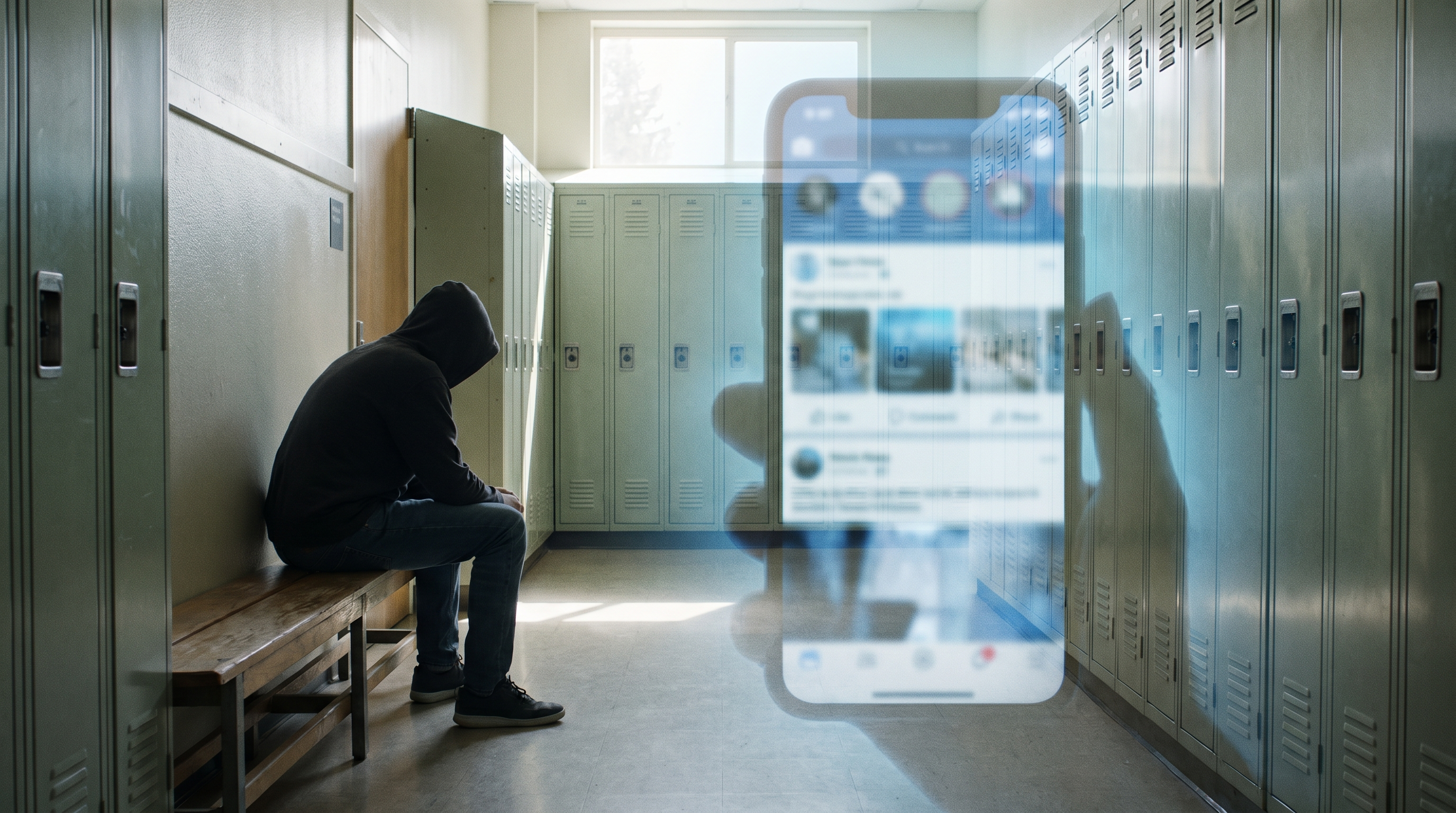
Across our earlier coverage of the social media addiction litigation, we have tracked the cases brought by individual families and by state attorneys general. There is a third group of plaintiffs whose numbers have grown quietly but dramatically, and they now make up one of the largest fronts in this entire fight: America's public school districts.
More than 1,000 school districts nationwide — including Los Angeles Unified, the second-largest district in the country, and at least a dozen others in California — are now suing Meta, Google, TikTok, and other platforms. Their argument is different from a family's, but it rests on the same foundation: that these companies knowingly designed products that harm children, and that schools have been left to absorb the cost.
What the Districts Are Claiming
The districts say the youth mental health crisis driven by compulsive social media use has forced them to divert resources away from their core mission of educating students. They have had to hire more counselors and therapists, train teachers and staff to handle crises, expand campus safety efforts, and educate students about cyberbullying and online safety — all while reported rates of depression, anxiety, self-harm, and suicidality among students climbed.
"Excessive social media use has fueled a youth mental health crisis which essentially forces schools to pivot from education to crisis intervention on a daily basis," said Aelish Baig, a lead attorney representing LAUSD in the federal case. She described "enormous diversion of staff time" and the significant costs tied to rising anxiety, depression, self-harm, and suicidality among students.
Like the individual and state cases, the districts are pursuing two things: financial compensation to reimburse what they have already spent, and injunctive relief — court orders forcing the platforms to redesign the features alleged to drive compulsive use, including infinite scroll, algorithmic recommendations, and autoplay.
A Familiar Playbook
LAUSD board member Nick Melvoin drew an explicit comparison to the district's earlier fight against e-cigarette maker Juul. In 2019, L.A. Unified joined a national class action arguing that Juul had targeted teenagers and drained school resources. In 2023, Juul paid school districts $1.2 billion.
The districts intend to run the same play here — documenting years of counseling referrals, disciplinary incidents, and the staff time consumed by what Baig described as "thousands of annual incidents" of suicidal behavior, cybercrimes, extortion, and threats coming in through social platforms. Melvoin said LAUSD will likely seek "tens of millions" in monetary relief along with injunctive relief and policy change.
Where Things Stand
Two developments have strengthened the districts' position. In March, a Los Angeles jury awarded $6 million to Kaley Glenn-Mills, who had sued Meta and Google as a teenager and successfully argued that the companies engineered their platforms to addict children — the verdict we covered in our earlier posts. Then in May, Breathitt County School District in Kentucky became the first district to settle, reaching a $27 million agreement over the platforms' contribution to rising mental health costs.
The federal multidistrict litigation in the Northern District of California is now moving in phases. The portion brought by state attorneys general is scheduled to begin in August, and the portion brought by school districts is set to follow in February 2027.
Meta appealed the Glenn-Mills verdict last week, and Google has said it plans to appeal as well. A Meta spokesperson said the company remains "confident in our record of protecting teens online." A Google spokesperson rejected the allegations, saying YouTube has "built services and policies to provide young people with age-appropriate experiences."
An Honest Look at the Other Side
It is worth being candid about the defense the companies are mounting, because it points to a real question these cases will have to answer. In the Kentucky litigation, the platforms argued that the district could not prove students' mental health problems were directly caused by social media — noting that none of the counseling referrals had identified "social media addiction" as the cause.
There is a scientific wrinkle behind that argument. Researchers have not established that social media use meets the clinical markers of a true addiction, such as measurable withdrawal, tolerance, and real-world impairment. What the research does increasingly support is that young people can form harmful and compulsive habits around these platforms — habits shaped by engagement features that critics say were engineered on the same variable-reward principles as slot machines. Plaintiffs argue that the reduced "potency" of that harm compared to something like alcohol does not make it harmless; it simply makes it slower and harder to see.
This causation question — how directly a specific harm can be traced to a specific platform — is likely to be a central battleground as these cases move toward trial. It is one reason the discovery process matters so much. Baig said she expects discovery to surface internal company documents linking youth mental health harms to platform design, echoing the 2021 disclosures in which Meta's own research reportedly showed that one in three teen girls felt worse about their bodies after using Instagram.
What This Means for Families
School district lawsuits seek to recover institutional costs and change how the platforms operate; they are separate from the personal injury claims an individual family can bring for harm to a specific child. But the two are deeply connected. The districts' cases, the state actions, and the family claims are all being coordinated in the same federal proceeding, and the evidence developed in one strengthens the others. As the coalition of plaintiffs grows — now spanning families, dozens of state attorneys general, and more than a thousand school districts — the pressure on these companies, and the body of evidence available to every plaintiff, continues to build.
Contact Triten Law
If your family has been affected by harms tied to social media use — particularly if your child began using these platforms as a minor — the law in this area continues to develop in ways that may benefit your claim. Triten Law offers free, confidential consultations to evaluate whether your situation fits within the existing litigation. Contact us today.
← Back to News & Insights