10 years
Talcum powder was a bathroom staple in American homes for generations. Johnson & Johnson's baby powder was marketed for daily use — on infants, and by women for feminine hygiene — for the better part of a century. Beginning in the mid-2010s, women diagnosed with ovarian cancer began filing lawsuits alleging that decades of talc use caused their disease, and that the company knew about the risk and said nothing.
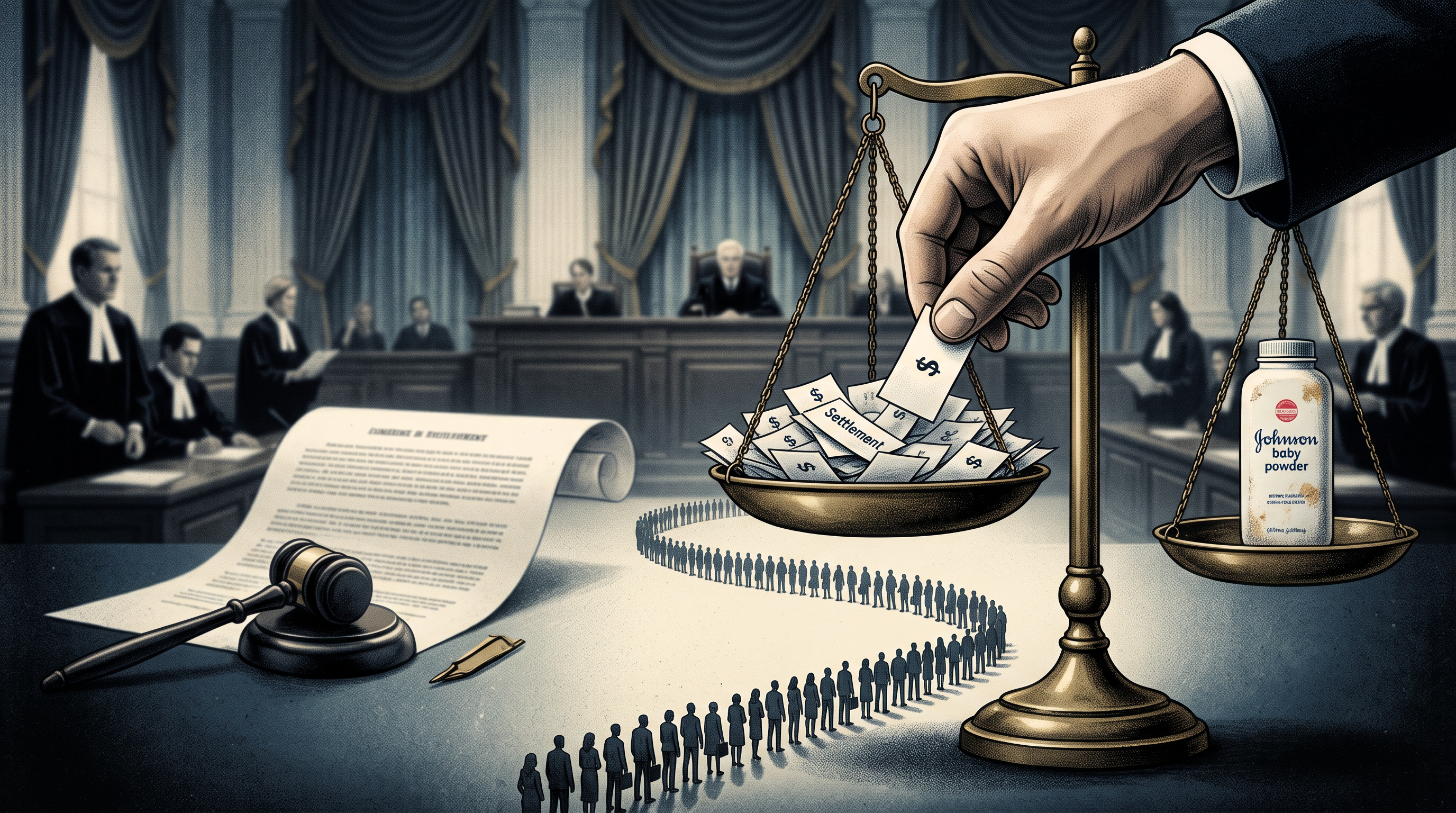
On July 27, Johnson & Johnson agreed to pay an estimated $5.5 billion to resolve roughly 76,000 of those claims. The company continues to deny that its talc products cause cancer, and its litigation vice president described the claims as meritless while explaining that the company settled to gain closure. Regardless of how J&J characterizes it, the deal represents one of the largest mass tort resolutions in recent memory — and it leaves some important questions open for anyone who has not yet come forward.
What the Settlement Actually Covers
- Approximately 76,000 claims, including cases consolidated in federal court in New Jersey and related suits pending in state courts
- Ovarian cancer claims — J&J had previously settled most of the claims alleging talc contained asbestos and caused mesothelioma
- Existing claims only. The agreement does not address future lawsuits, unlike the bankruptcy-based settlements J&J previously attempted
- An uncapped payout. The deal assigns specific values to qualifying ovarian cancer claims but does not cap J&J's total exposure. One of the attorneys who negotiated the agreement has said the final figure could reach $7 billion or more depending on participation
- A defined payment timeline. J&J expects to pay roughly $3 billion in 2027 with additional payments in 2028, and claims are expected to be paid within 18 months rather than stretched over a decade
- The settlement is also conditional. It requires acceptance by 95% of ovarian cancer claimants in state or federal court before it becomes final.
Why This Litigation Took a Decade
The case history explains why so many claims accumulated before any resolution. J&J pulled talc-based baby powder from the U.S. market in 2020 and replaced it with a cornstarch formulation, but it never conceded a safety problem. Before litigation was paused, trial results were mixed — including a multibillion-dollar verdict for a group of 22 women, alongside defense wins and verdicts reduced on appeal.
The litigation then stalled for more than three years while J&J pursued a strategy known as the "Texas two step," moving talc liability into a shell subsidiary and filing bankruptcy three separate times in an attempt to force a global settlement. All three attempts were dismissed, and the litigation resumed in March 2025.
What followed was a run of defense victories: individual trial wins, successful challenges to plaintiffs' counsel, and rulings limiting the expert testimony plaintiffs relied on. Just last week, a federal judge raised doubts about individual plaintiffs' ability to prove that talc specifically caused their cancer. The settlement arrived on the heels of that ruling.
The Legal Landscape Going Forward
This agreement resolves a large share of the pending inventory, but it is not the end of talc litigation. Because future claims were carved out, women diagnosed after this settlement is finalized will be litigating in a different environment — one shaped by the recent causation rulings and without a pending global resolution. Anyone weighing whether to come forward should understand that the landscape is changing.
Contact Triten Law
Our attorneys handle mass tort claims involving defective products and pharmaceutical injuries, and we can review your talc-related ovarian cancer claim at no cost to you. If you or someone in your family used talcum powder regularly and was later diagnosed with ovarian cancer, contact us today for a free, confidential consultation.
This post is for informational purposes only and does not constitute legal advice. Past results do not guarantee or predict the outcome of any future case. Every claim is evaluated on its own facts.
← Back to News & Insights