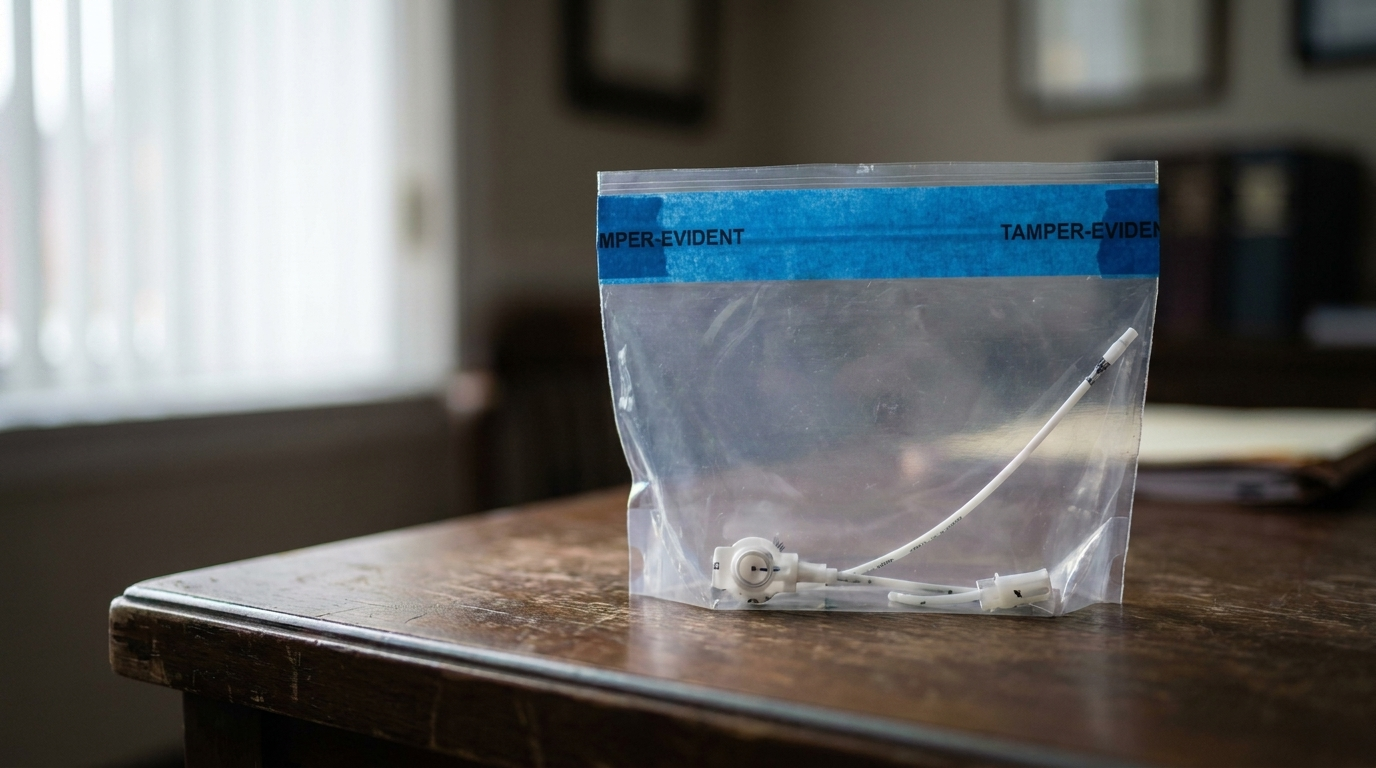
A Guide for Mass Tort Law Firms
More than one million implantable ports are placed in U.S. patients each year. The Bard MDL precedent for IVC filters resolved at over $625 million. More than 8,000 cases are now pending in MDL 3081. The Bard Power Port tort sits at the intersection of a sympathetic plaintiff population, a deep-pocketed defendant with a documented record of internal knowledge, and an active federal MDL moving toward resolution. This report is a working guide for firms evaluating intake.
What This Report Covers
- The device. How the Bard Power Port was designed, why its polyurethane catheter fractures, and what BD knew before patients were harmed.
- The injuries. Catheter fracture, embolization, cardiac perforation, and the constellation of injuries driving high-value claims.
- The opportunity. MDL 3081 status, intake criteria, case economics, and how to position your firm in a fast-moving docket.
Executive Summary
The Bard Power Port is a fully implantable port-a-cath device used to deliver chemotherapy, IV fluids, and other medications directly into a patient's bloodstream without repeated needle sticks. Manufactured by C.R. Bard and now sold by Becton, Dickinson and Company (BD) following its 2017 acquisition, the Power Port has been implanted in millions of cancer patients and others requiring long-term intravenous access. For many patients, it promised convenience and dignity during an already difficult medical journey.
Instead, a significant number of those patients experienced catheter fracture — a defect in which the polyurethane catheter component breaks apart inside the body. Catheter fragments can travel through the bloodstream and lodge in the heart, lungs, or pulmonary arteries, a phenomenon called embolization. The consequences range from emergency surgical retrieval to cardiac perforation, arrhythmia, and death. Internal documents produced in litigation have shown that Bard was aware of catheter fracture failures well before the scale of patient harm became publicly known.
Why this tort has staying power:
Unlike torts with a defined injury window, Power Port cases continue to arise because millions of devices remain implanted in patients today. Every catheter fracture that occurs is a potential new case, and the MDL is still actively accepting filings. This is a docket in motion, not a closing inventory.
Federal MDL 3081 (In re: Bard Implanted Port Catheter Products Liability Litigation) was established in the District of Arizona in 2022. With more than 8,000 cases filed, bellwether trials underway, and BD facing a liability record that includes prior Bard settlements and a well-developed record of internal knowledge, this tort presents a strong and timely intake opportunity for mass tort law firms.
Background: The Device and the Defect
Implantable ports — commonly called port-a-caths or simply ports — are small medical devices surgically placed beneath the skin, typically in the chest. A catheter connects the port to a large central vein, allowing clinicians to administer medications or draw blood without accessing a peripheral vein each time. They are standard of care for patients receiving chemotherapy, total parenteral nutrition, or other long-term IV therapies.
The Bard Power Port distinguishes itself from standard ports by being rated for high-pressure power injection, making it compatible with CT contrast injections and similar procedures. This feature extended its use into a broader population than conventional ports and contributed to its widespread adoption. Bard's Power Port line includes multiple models, with the PowerPort MRI and the PowerLoc safety needle among the most prevalent in litigation.
The Central Defect: Catheter Fracture
The core allegation across the Bard Power Port litigation is that the polyurethane catheter is prone to fracture under conditions of normal use. Plaintiffs allege that the catheter material degrades over time, becomes brittle, and fractures at stress points, particularly at or near the port reservoir. Contributing design factors identified in plaintiff expert reports include:
- Polyurethane formulation with inadequate long-term durability for permanent implantation
- Port-catheter junction geometry that concentrates mechanical stress during patient movement
- Insufficient resistance to calcification and biofilm formation over extended implant periods
- Power-injection-rated design that subjects the catheter to higher pressure cycling than conventional ports
Once fractured, catheter fragments become free-floating emboli. Depending on size and destination, a migrating fragment can cause pulmonary embolism, cardiac tamponade, arrhythmia, vascular perforation, or may require open cardiac surgery for retrieval. Even when surgical retrieval is successful, patients face the trauma of an unexpected surgical procedure on top of an already serious underlying medical condition.
"Bard received fracture failure reports from physicians and hospitals for years before implementing any design change or patient-level warning."
At a Glance: The Bard Power Port
- Manufacturer: C.R. Bard, Inc.; acquired by Becton, Dickinson and Company (BD) in 2017 for $24 billion
- Device classification: FDA Class II implantable vascular access device (510(k) cleared)
- Primary use: Long-term IV access for chemotherapy, contrast injection, TPN, and blood draws
- Primary defect: Catheter fracture and embolization of fragments to heart, lungs, or vasculature
- Population at risk: Cancer patients, dialysis patients, and others requiring long-term IV access; the device remains implanted in millions of current patients
- MDL: MDL 3081, District of Arizona (established 2022); 8,000+ cases filed as of 2026
- Defendant financial profile: BD reports approximately $20 billion in annual revenue and a market capitalization above $60 billion — a substantial balance sheet to fund resolution
Patient Harm: Who Was Injured and How
Power Port plaintiffs are among the most sympathetic in mass tort litigation. The typical claimant is a cancer patient or former cancer patient who agreed to have a port implanted as part of their treatment plan, trusting that the device would help rather than harm them. Many were never warned that catheter fracture was a known risk, and many did not discover the fracture until fragments had already embolized.
Injury Categories and Claim Value Drivers
- Catheter fracture requiring surgical or interventional retrieval (highest volume injury category)
- Pulmonary embolism from a migrating catheter fragment, with or without permanent lung damage
- Cardiac perforation or tamponade requiring emergency intervention
- Arrhythmia or other cardiac events attributable to fragment migration
- Infection, sepsis, or thrombosis at the fracture site
- Wrongful death in cases where fragment migration caused fatal cardiac or pulmonary events
- Emotional distress and loss of consortium, particularly where fracture occurred during active cancer treatment
High-value case profile:
The strongest cases combine a documented catheter fracture (confirmed on imaging), a symptomatic embolization event, and a procedure or hospitalization required for retrieval or treatment. Cases where the fracture occurred during active cancer treatment carry additional emotional weight and often result in enhanced damages for pain and suffering.
Because the Power Port is used predominantly in oncology patients, many claimants also carry underlying terminal or serious diagnoses. This creates both urgency (statute of limitations considerations for estates) and complexity (causation disputes about whether harm was caused by the device or the underlying disease). Experienced plaintiff experts have developed robust methodologies for distinguishing device-related injury from disease progression, and that expert infrastructure is now mature within the MDL.
Defendant Profile: BD and the Bard Legacy
Becton, Dickinson and Company (BD) is one of the largest medical device companies in the world, with approximately $20 billion in annual revenue and a market capitalization exceeding $60 billion. BD acquired C.R. Bard in 2017 for $24 billion, inheriting both the Power Port product line and the growing body of adverse event reports that had been accumulating for years prior to the acquisition.
C.R. Bard's litigation history is directly relevant to the Power Port cases. Bard has faced and resolved mass tort litigation across multiple product lines, including hernia mesh, IVC filters, and urological devices, demonstrating both a pattern of defendant conduct and an institutional familiarity with large-scale resolution. In the IVC filter MDL, Bard paid approximately $625 million to resolve cases — a benchmark that informs plaintiff expectations in the Power Port litigation.
Key Defendant Liability Facts
- Internal Bard documents produced in discovery show adverse event reports of catheter fracture dating back to at least the early 2000s
- Bard made design modifications to the Power Port catheter on multiple occasions without disclosing fracture risk to patients or physicians
- BD continued marketing Power Port devices after the 2017 acquisition despite ongoing adverse event accumulation
- Failure-to-warn claims are supported by the absence of any fracture-specific patient warning in Bard's product labeling for an extended period
- The $24 billion acquisition price creates a strong inference that BD conducted due diligence and assumed known liabilities
"BD's acquisition of Bard included full assumption of product liability. The deep pockets are unambiguous, and the paper trail from Bard's own files is substantial."
Regulatory and Legal Record
The regulatory and litigation record supporting Power Port plaintiffs has developed significantly since the MDL was established. Key milestones include:
- Early 2000s: Adverse event reports of catheter fracture begin accumulating in Bard's internal tracking systems and the FDA MAUDE database.
- 2007–2012: FDA receives an increasing volume of MAUDE reports of Power Port catheter fractures; Bard makes iterative design modifications without formal recall or patient notification.
- 2017: BD acquires C.R. Bard for $24 billion and assumes full product liability exposure for the Power Port and all Bard legacy devices.
- 2019–2021: Plaintiff firms begin filing individual Power Port fracture cases in federal courts; case volume accelerates as awareness grows.
- 2022: MDL 3081 is established in the District of Arizona (In re: Bard Implanted Port Catheter Products Liability Litigation), with Judge David Campbell presiding.
- 2023: Case filings surpass 5,000; discovery opens; the plaintiff steering committee is constituted; bellwether selection begins.
- 2024–2025: Bellwether trial pool identified and discovery completed; expert reports exchanged; case filings exceed 8,000.
- 2026: Bellwether trials are proceeding, settlement discussions are active, the MDL continues accepting new filings, and a second-stage resolution is anticipated.
Liability Theories and Legal Framework
The Bard Power Port litigation is built on well-established product liability theories, reinforced by a substantial documentary record from Bard's own files. Plaintiffs pursue claims under multiple theories that can be layered depending on jurisdiction and case-specific facts.
Claims Against BD / C.R. Bard (Manufacturer)
- Products liability: design defect: Polyurethane catheter material and junction geometry prone to fracture under normal use conditions.
- Products liability: failure to warn: Inadequate labeling regarding catheter fracture risk; no patient-facing fracture warning for an extended period.
- Negligence: Failures in design, testing, and post-market surveillance.
- Fraud and concealment: Internal knowledge of fracture failures not disclosed to physicians, patients, or the FDA.
- Breach of implied warranty of merchantability: The device was not fit for its intended purpose of long-term implantation.
- Negligence per se: Failure to file timely MDRs under 21 C.F.R. Part 803 for known fracture failures.
Jurisdictional Considerations
Because the Power Port is a Class II 510(k)-cleared device, claims are not preempted under the Riegel v. Medtronic standard applicable to Class III PMA devices. This is a critical distinction from some other device torts. Plaintiffs can pursue parallel violation claims under state tort law without federal preemption barriers, significantly broadening the viable theory set.
Case Economics and Intake Opportunity
The Power Port tort offers favorable case economics grounded in a high-sympathy plaintiff population, a wealthy and legally experienced defendant, a developed MDL infrastructure, and a liability record that strongly supports resolution.
- Liability strength — strong. Internal documents, MAUDE data, and iterative undisclosed design changes support design defect and failure-to-warn theories.
- Preemption risk — low. The Power Port is a Class II 510(k) device; Riegel preemption does not apply, and state law claims are fully viable.
- Defendant ability to pay — very high. BD reports annual revenue of roughly $20 billion and a market cap above $60 billion; the IVC filter MDL precedent is approximately $625 million.
- MDL status — active and advancing. Bellwether trials are proceeding in 2025–2026, and settlement discussions are underway.
- Case volume available — substantial. Millions of devices remain implanted, new fracture cases continue to arise, and a large unrepresented population remains.
- Average case value range. Fracture with a retrieval procedure — $150K–$500K. Embolization with cardiac or pulmonary injury: $500K–$2M+. Wrongful death cases occupy a premium tier.
- Statute of limitations — varies by state; discovery rule and fraudulent concealment tolling are available in most jurisdictions. Act promptly on older fractures.
- Competition for cases — active but not saturated. Major firms are engaged, and there is a strong marketing opportunity for well-resourced intake operations.
Intake criteria snapshot:
Priority intake should focus on patients with a confirmed or suspected Bard Power Port implant who experienced catheter fracture, required a retrieval procedure, or were diagnosed with catheter fragment embolization. Secondary intake includes patients who received imaging showing catheter fracture or fragment migration with no retrieval yet performed. At intake, document the implant date, fracture discovery date, treating facility, and any retrieval or intervention records.
How Mass Tort Firms Should Position Now
MDL 3081 is at a critical juncture. Bellwether trials are underway, expert frameworks are established, and the defendant is a sophisticated party that understands how these litigations resolve. Firms that have built meaningful dockets will be well positioned as the MDL moves toward a global resolution structure. Firms entering now can still build strong portfolios, but the window for easy intake at scale is narrowing as plaintiff firm competition intensifies.
Recommended Positioning Steps
- Screen your existing oncology and chronic illness client base for Power Port implant history; many prior clients may have unasserted claims.
- Build digital intake targeting cancer survivors and current cancer patients, who represent the core Power Port population.
- Prioritize cases with imaging confirmation of fracture or embolization; these are the fastest to qualify and the highest in settlement value.
- Engage co-counsel or referral relationships with firms active in MDL 3081 to leverage existing discovery and expert work product.
- Retain a biomedical engineering expert familiar with polyurethane degradation early; causation is the central battleground in these cases.
- Monitor the MDL 3081 docket in the District of Arizona for bellwether trial outcomes, which will set settlement grid expectations.
- Evaluate whether any cases involve pre-acquisition Bard conduct that may support enhanced damages arguments against BD for assumption of known liability.
"The bellwether process is the valuation engine. Firms with cases in the pool are shaping the settlement grid that will govern every case in this MDL."
Conclusion
The Bard Power Port tort is a well-developed, high-value mass tort with a sympathetic plaintiff population, a deep-pocketed defendant with an established record of concealment, a favorable preemption posture, and an active MDL moving toward resolution. The device remains implanted in millions of patients, ensuring a continuing stream of new cases even as the existing docket advances.
For mass tort firms with oncology referral networks, digital intake infrastructure, or existing relationships within the MDL, this is a tort that rewards investment. The combination of strong liability facts, meaningful per-case values, and a defendant that has paid before creates the conditions for significant portfolio returns. Firms that act with urgency now will hold the most favorable economics as the MDL advances toward a global settlement framework.
← Back to News & InsightsReady to evaluate Bard Power Port intake for your firm? To discuss Power Port intake opportunities or explore how Triten Law can support your firm, contact us at client.support@tritenlaw.com.
This article is intended solely for mass tort legal professionals evaluating litigation intake opportunities. It does not constitute legal advice, medical advice, or a solicitation of clients. Case values referenced are estimates based on publicly available litigation data and industry analysis. Outcomes vary. The information contained herein reflects publicly available regulatory, legislative, and court record sources as of the publication date.